Demanding Answers from Thames Water and the Environment Agency
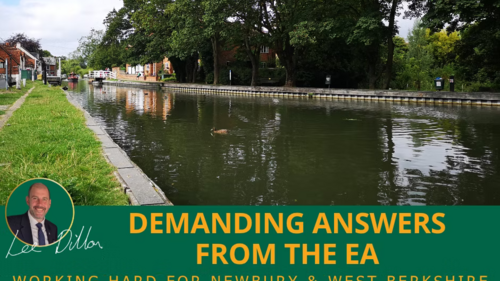
Residents across Newbury and West Berkshire are increasingly concerned about the continued discharge of sewage into our local rivers and streams, and with good reason. Despite several days of dry weather, Thames Water has continued to release sewage into the Winterbourne stream, raising serious questions about regulatory oversight and environmental protection.
Earlier this year, I wrote to both Thames Water and the Environment Agency regarding repeated sewage discharges from treatment works across the Rivers Kennet, Lambourn and Pang. In its response, the Environment Agency confirmed that it had carried out inspections at Newbury, East Shefford, Hungerford, Compton and Winterbourne within the last six months, and that it would investigate and enforce against any serious permit breaches.
However, since that correspondence, the situation at Winterbourne has worsened. Since the start of April, the site has now discharged intermittently for a total of 550 hours and 30 minutes. As I write, sewage has been flowing into the stream for a further 8 hours and 19 minutes, despite no rainfall for several days.
I have therefore written again to the Environment Agency to ask what enforcement action is being taken to address these illegal sewage spills.
With warmer weather approaching, many residents will be hoping to enjoy our rivers and streams. It is vital that they are able to do so safely and confidently, knowing that the regulatory system is functioning in their best interests and that our waterways are being properly protected.
Next weekend, I will be joining the Sewage Paddle Out protest organised by Eco Friends, where residents will come together to call for an end to sewage pollution in our rivers. Anyone wishing to take part can register here: www.eco-friends.org.uk/paddleout
I will continue to press both Thames Water and the Environment Agency for answers and for action. Our rivers are among our most treasured natural assets, and they must be protected for the communities who rely on them and for future generations.